The Future of AI in Enterprise Web Development
Explore how AI coding assistants, agentic workflows, custom LLMs, and intelligent interfaces are fundamentally reshaping the lifecycle of enterprise web application development.
On This Page
The Future of AI in Enterprise Web Development
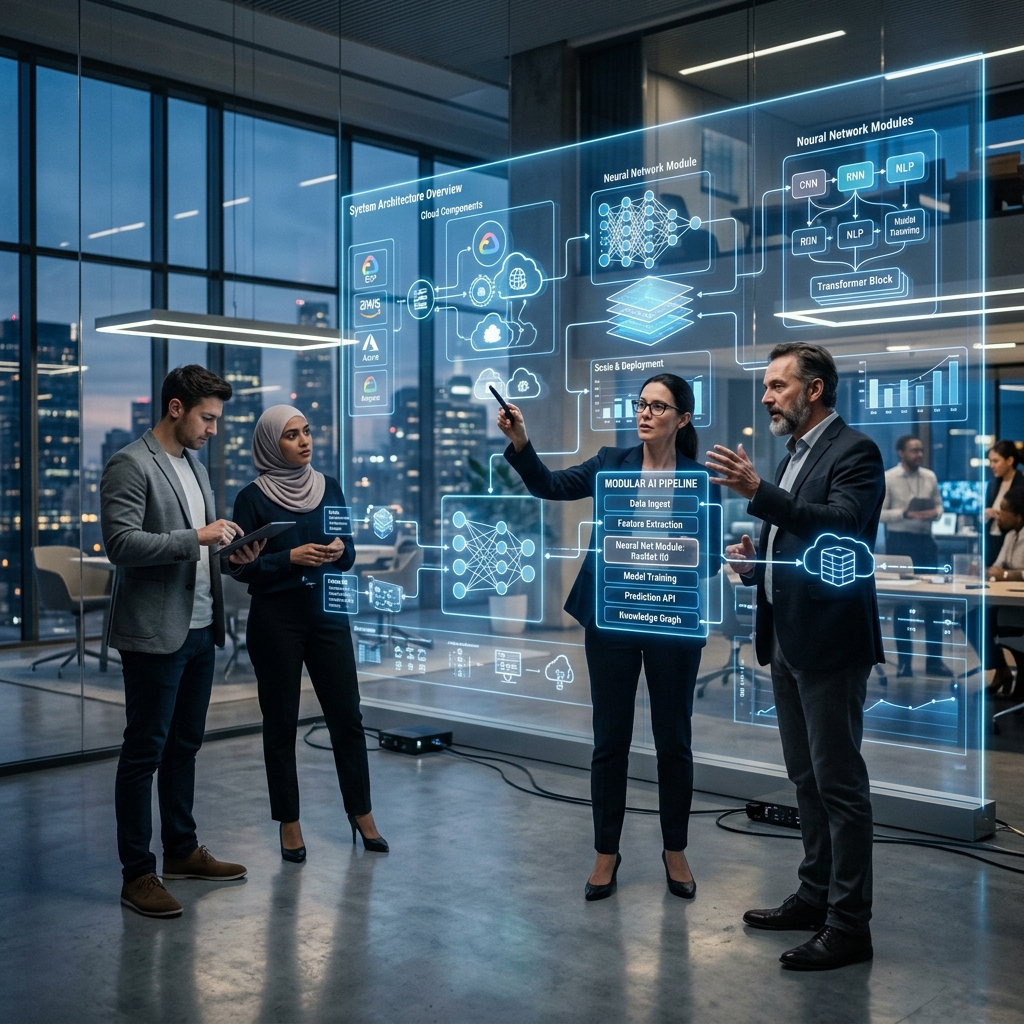
The software development lifecycle (SDLC) is undergoing a major paradigm shift. In enterprise web development, the integration of Artificial Intelligence has moved far beyond simple code completion plugins. In 2026, AI has become a primary driver of architectural planning, UI design, database optimization, and automated testing.
Enterprise web applications are complex, demanding high levels of security, scalability, accessibility, and integration with legacy systems. AI enables development teams to manage this complexity, reduce time-to-market, and deliver personalized user experiences.
In this article, we examine how AI is transforming enterprise web development and what this means for the future of software engineering.
1. AI-Driven Code Generation and Co-Pilot Editors
First-generation AI coding assistants acted as advanced autocomplete tools. Today, AI development partners (like Cursor, GitHub Copilot, and custom agency subagents) can understand entire codebases, refactor complex systems, and generate full features based on plain English instructions.
The Shift in Developer Focus:
Instead of spending hours writing boilerplate code, configuring routers, or writing basic unit tests, engineers now focus on:
- System Architecture & Design: Defining how microservices interact, designing secure database schemas, and planning API endpoints.
- Security & Compliance Reviews: Reviewing AI-generated code to ensure it meets strict security standards (such as OWASP Top 10) and data protection policies.
- User Experience (UX) Flow: Ensuring that the application interfaces are intuitive, accessible, and run smoothly.
This shift increases developer productivity, allowing small, focused engineering teams to build and maintain massive enterprise-scale systems.
2. Generative UI and Dynamic Interfaces
Traditionally, building user interfaces required designer-developer handoffs, translating visual designs into HTML/CSS, and writing custom styling rules.
AI tools (like v0 by Vercel and generative UI models) are changing this workflow. Developers can describe the layout and style they need in natural language, and AI compiles responsive, clean React components using systems like Tailwind CSS.
Real-Time Interface Adaptation:
In the future, enterprise interfaces will not be static. We are moving toward Generative User Interfaces, where the application's layout can adapt dynamically in real-time based on user preferences, access permissions, and behavior. An admin might see a dashboard optimized for data density, while a standard user is presented with a simplified task-focused flow—all generated dynamically by layout models.
3. Autonomous Testing and Quality Assurance
One of the most time-consuming phases of enterprise development is testing. Ensuring that a code change doesn't break legacy features requires writing thousands of unit, integration, and end-to-end (E2E) tests.
AI is transforming QA workflows through:
- Self-Healing Test Suites: If a developer updates a button's CSS selector or changes a form field's layout, AI-powered testing frameworks can recognize the change and update the test code automatically, preventing false failures.
- Automated Scenario Generation: AI can analyze user behavior logs to identify common user paths and generate E2E test scripts for those flows, ensuring critical paths are always covered.
- Visual Regression Auditing: AI models compare visual screenshots of the application before and after updates to catch subtle styling bugs that traditional code tests miss.
4. Intelligent Middleware and Edge API Routing
In enterprise systems, performance is critical. Serving database queries and API calls across different geographical regions can introduce lag.
AI middleware helps optimize routing and data fetching:
- Predictive Data Prefetching: AI models analyze user navigation patterns to predict which pages they will click next, prefetching data and rendering assets on edge servers before the request is even made.
- Dynamic Database Optimization: AI engines monitor slow-running SQL queries, automatically suggesting and applying database indexes to speed up response times.
- Anomaly and Threat Detection: AI models inspect incoming API traffic in real-time to identify and block security threats (like SQL injection or DDoS attacks) before they reach application servers.
The VSNEXOS Approach: AI-Assisted Centralized Engineering
At VSNEXOS, we integrate AI into every stage of our development process:
graph LR
    A[AI Requirement Analysis] --> B[AI-Assisted Prototyping]
    B --> C[Centralized Engineering Build]
    C --> D[Self-Healing Testing]
    D --> E[Edge Deployment]
- Requirement Analysis: We use custom models to parse business requirement documents, identifying technical specifications and security needs instantly.
- Speeding Up Prototypes: We leverage generative UI tools to construct functional frontend prototypes in hours, allowing clients to test and refine the interface early.
- Strict Quality Audits: AI-assisted code reviews check every pull request for performance, accessibility, and security compliance before it goes to production.
Conclusion
The future of enterprise web development is collaborative, with human engineers designing architecture and guiding AI tools to generate, test, and optimize the code. This collaboration enables faster development cycles, more secure applications, and highly responsive user experiences.
For enterprise organizations, adopting these AI-driven workflows is key to maintaining a competitive edge, allowing them to innovate faster and respond quickly to changing business needs.
Building enterprise SaaS for Indian businesses from Hyderabad.
LinkedIn